

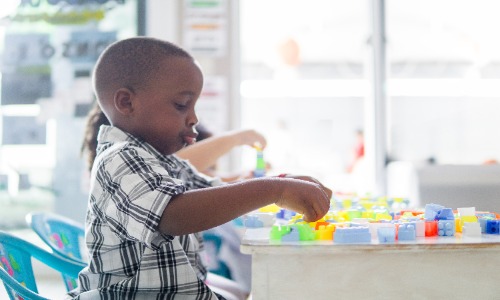
For families planning their child’s early education in Ormeau and its surrounding areas, the multi-year journey leading up to Prep can sometimes feel confusing. A common point of uncertainty for parents is distinguishing between the developmental focus of the 3-to-4 age bracket and the formal 4-to-5 preschool year.
At Elm Tree Early Learning, these stages are structured as two distinct yet interconnected educational pathways. Understanding how the Pre-Kinder room builds the foundation for the formal Kindergarten program helps parents ensure their child transitions to primary school with genuine confidence and capability.
Stage 1: The Pre-Kinder Room (Ages 3–4)
Focus: Foundational Independence and Emotional Regulation
The Pre-Kinder room is specifically engineered to transition children out of the toddler mindset and into a structured group dynamic. At this stage, the pedagogical priority is not academic drilling, but rather the development of executive function and social-emotional regulation.
- Emotional Co-Regulation to Self-Regulation: Three-year-olds experience rapid emotional shifts. Educators focus on helping children identify big feelings, use verbal communication during peer conflicts and practice basic mindfulness techniques to calm their nervous systems.
- Functional Independence: Children learn to manage their personal belongings, navigate bathroom routines independently and take responsibility for their immediate learning environment (such as packing away resources).
- Collaborative Play Dynamics: The curriculum shifts from parallel play toward cooperative, rule-based group interactions. Children practice the complex social arts of negotiation, delayed gratification and active listening.
Stage 2: The Kindergarten Program (Ages 4–5)
Focus: Advanced School Readiness and Cognitive Endurance
Once a child has developed strong emotional regulation and independence, they transition into the formal, government-approved Kindergarten program. With a steady emotional foundation in place, the curriculum shifts its focus toward advanced cognitive school readiness.
- Early Literacy and Phonological Awareness: Using structured, play-based literacy platforms, children explore sound-letter relationships (phonemes), syllable segmenting and print concepts, establishing the core building blocks for fluent reading.
- STEM Inquiry and Mathematical Reasoning: Early numeracy moves beyond simple counting into abstract reasoning, sorting patterns, spatial geometry and early scientific inquiry. Children participate in hands-on experiments that require them to form hypotheses, test variables and observe outcomes.
- Focus Endurance and Attentional Control: To prepare for the structured primary school classroom, educators gradually extend the duration of group learning experiences. Children build the stamina needed to sit comfortably, follow multi-step instructions and maintain focus on a single task for 20 to 30 minutes.
The Elm Tree Transition Architecture
An abrupt shift between rooms can cause unnecessary stress and set back a child’s developmental progress. To prevent this, Elm Tree utilises a structured transition protocol that eases children into their new learning environments:
- Shared Outdoor Integration: The physical design of the centre allows Pre-Kinder and Kindergarten children to interact regularly during outdoor play. This cross-age socialisation makes the physical space and the older cohort familiar well before the formal move.
- Scaffolding Orientation Visits: Throughout the final term of the Pre-Kinder year, children participate in short, progressive orientation visits to the Kindergarten room. These visits begin with brief 15-minute story sessions and scale up to full morning learning blocks.
- Comprehensive Educator Continuity: Pre-Kinder and Kindergarten educators maintain detailed developmental portfolios for every child. This collaborative hand-off ensures that the Kindergarten teacher understands each child’s specific learning style, emotional triggers and vocabulary preferences before day one.
Viewing early education as a continuous, multi-year pathway allows parents to support their child’s development without unnecessary pressure. By building emotional resilience in the Pre-Kinder room and layering cognitive skills in the Kindergarten program, Elm Tree provides a balanced, reliable framework that helps young learners step into primary school fully prepared to succeed.