

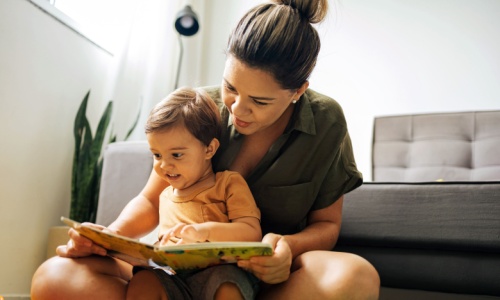
The two-year-old is a master of rapid change and nowhere is this more evident than in their language development. The adorable babbles and single words of yesterday are quickly giving way to the building blocks of conversation. For many parents, this is a triumphant and sometimes bewildering time, as their little one begins to string together phrases like “daddy gone,” “my car,” or “me do it!”—a key milestone in this age group.
Talk With Your Child
Supporting your child’s journey from babble to coherent sentences is one of the most rewarding parts of parenting. While every child develops at their own pace, there are a few practical strategies you can use to encourage this blossoming skill. One of the most effective is to talk to your child as if they are already having a conversation with you. Narrate your day, ask questions (and patiently wait for their answer) and expand on their short phrases. If they say, “Doggy,” you can respond with, “Yes, that’s a big, brown doggy! The big doggy is running fast.” This helps them learn new words and the structure of a sentence.
Read Together
Reading together is also a powerful tool. Point to pictures and name the objects, characters and actions. This not only builds their vocabulary but also helps them understand the link between pictures, words and meaning. Furthermore, play-based learning environments, such as those at Elm Tree Early Learning, are specifically designed to foster this growth. Their thoughtfully designed toddler environment promotes independent exploration and learning through a variety of engaging structures, climbing equipment and sensory areas. This play-based approach is crucial, as children naturally learn best by doing.
At Elm Tree Early Learning, educators create a warm, familiar environment in the Kiwi Room for toddlers aged 2 to 3, where children are encouraged to explore their growing independence. The focus is on supporting their social, emotional and physical development through play, which naturally includes communication. Through carefully crafted activities, children are encouraged to express themselves and build relationships with their peers, laying the foundation for future learning. The nurturing staff is trained to facilitate these interactions, encouraging cooperation, sharing and, most importantly, communication among the children.
By combining these strategies at home and in a dedicated learning environment, you can help your toddler feel confident in expressing themselves. This will not only prepare them for a lifetime of learning but also deepen the connection between you, as you witness their triumphs, one sentence at a time.