

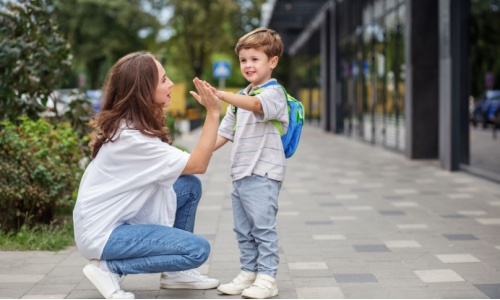
When people talk about transitions in early childhood, the conversation almost always jumps straight to the big one — the move from childcare to primary school. But ask any experienced early childhood educator and they’ll tell you: the internal room transitions children make within a centre are significant milestones in their own right. None more so than the move from Pre-Kindy to Kindergarten.
For a four-year-old, this is a real shift. New room, new faces, new expectations. And for parents watching it unfold, it can feel surprisingly emotional — even when everything is going well.
What Actually Changes
The Kindergarten room at Elm Tree is designed for children aged four to six, and the experience is intentionally richer and more structured than Pre-Kindy. A few things shift noticeably:
Curriculum depth. The Kindergarten program builds on the Early Years Learning Framework with greater emphasis on school-readiness skills — literacy foundations, numeracy concepts, structured group activities and longer periods of focused engagement. Children are gently stretched in ways that Pre-Kindy doesn’t yet require.
Peer dynamics. Your child will likely encounter a slightly different mix of children, some of whom are already well-settled in the Kindergarten room. Learning to navigate an established social environment is itself a valuable developmental experience — but it’s one that can take a few weeks to feel comfortable.
Educator relationships. The bond between a child and their Pre-Kindy educators is real and meaningful. Moving to a new room means building that trust again with new adults, which takes time and shouldn’t be rushed.
What Stays the Same
Critically, the things that give children security don’t change with the room. At Elm Tree, the centre’s overall philosophy — play-based learning, holistic development, warm and consistent care — runs through every room from Nursery to Kindergarten. The physical environment remains familiar. The routines of the day, the faces of other staff around the centre, the rituals of drop-off and pick-up — these anchors remain steady even as the specific room changes.
Children are also more resilient in transitions when they feel genuinely known. Elm Tree’s small, privately-owned structure means educators across the centre are familiar with children well before any formal room move occurs.
How the Transition Is Managed
A good transition doesn’t happen on one day — it’s a gradual process. At Elm Tree, children moving into the Kindergarten room have the opportunity to visit the space and spend time with their new educators before the move becomes permanent. Families are kept informed and involved throughout, with communication that treats parents as active partners rather than passive observers.
If your child is approaching this milestone, the most useful thing you can do is talk about it warmly and matter-of-factly at home — acknowledging that something new is coming, while expressing genuine confidence that they’re ready for it. Because they almost certainly are.