

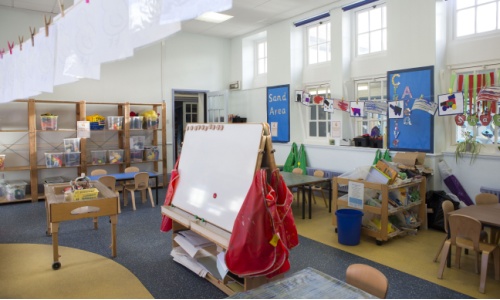
The first two years of life are the most intensive period of brain development in the entire human lifespan. From around six weeks of age, an infant’s brain is forming connections at a pace that will never again be matched — building the neural architecture that underpins language, emotion, cognition, movement and social understanding. For Gold Coast families considering early learning options, understanding what happens in a well-designed nursery environment — and why it matters so profoundly — can completely reframe how you think about those earliest months away from home.
Why the environment is never neutral
A common assumption about nursery-aged children is that they’re too young to be meaningfully affected by their physical surroundings. Developmental neuroscience tells a very different story. Every sensory experience an infant has — every texture they touch, sound they hear, face they observe and space they explore — generates neural activity that either reinforces existing connections or builds new ones. The physical environment isn’t a backdrop to development. It is, quite literally, one of its primary inputs.
Thoughtfully designed nursery spaces leverage this understanding deliberately. Natural light supports circadian rhythm regulation and visual development. Calm, uncluttered areas allow infants to process sensory input without becoming overwhelmed. Defined exploration zones — low-level shelves with accessible objects of varied texture, weight and form — invite the kind of independent investigation that builds cognitive schemas. Floor spaces that allow freedom of movement support both gross motor development and the spatial awareness that underlies later mathematical thinking.
Nurturing versus stimulating: an important distinction
Not all stimulation is equal and more is emphatically not better. Developmental neuroscientists draw a clear distinction between environments that are enriched and those that are overstimulating. An enriched environment offers varied, age-appropriate sensory experiences in a context of emotional security. An overstimulating one bombards the developing nervous system with input it cannot yet organise or regulate — producing stress rather than growth.
This is why responsive caregiving — the attentive, attuned, individualised care that skilled educators provide — is inseparable from environmental design. A beautifully equipped nursery room managed by inattentive staff provides far less developmental support than a simpler space where educators consistently follow each infant’s lead, respond promptly to distress and narrate daily experiences in warm, unhurried language. Both elements are necessary. Neither works well without the other.
What good nursery design looks like in practice
At Elm Tree Early Learning in Ormeau on the Gold Coast, the nursery is designed specifically for children aged six weeks to two years, with spaces that are thoughtfully curated to support developmental needs alongside personal growth. The approach reflects an understanding that every moment in the nursery is an opportunity for learning — not through formal instruction, but through the quality of the environment, the warmth of the caregiving relationships and the freedom offered for safe exploration and peer interaction. Their playground provides a dedicated space for physical activity and early social engagement, recognising that outdoor exploration is as neurologically significant as anything that happens indoors.
Practical guidance for parents and educators
At home, the principles are straightforward. Prioritise face-to-face interaction over screen time in the first two years — the human face is the richest sensory and social stimulus available to an infant. Narrate daily routines simply and consistently, building the language pathways that underpin later literacy. Offer varied but not excessive sensory experiences — different natural materials, outdoor textures and gentle music all contribute without overwhelming. And resist the pressure to accelerate development with educational toys or programmes that promise cognitive shortcuts. Security, responsiveness and exploration are the genuine accelerants of early brain development.
For Gold Coast families, the nursery environment your child spends their earliest months in is doing far more than providing safe supervision. It is, in the most literal neurological sense, helping to build their brain.